


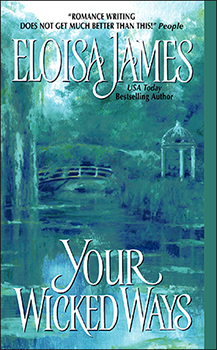
Your Wicked Ways
Book 4 in the Esme & Friends Series
Helene, the Countess Godwin, knows there is nothing more unbearably tedious than a virtuous woman. After all, she’s been one for ten long years while her scoundrel of a husband lives with strumpets and causes scandal after scandal. So she decides it’s time for a change–she styles her hair in the newest, daring mode, puts on a shockingly transparent gown, and goes to a ball like Cinderella, hoping to find a prince charming to sweep her off her feet… and into his bed.
But instead of a prince, she finds only her volatile, infuriatingly handsome… husband, Rees, the Earl Godwin. They’d eloped to Gretna Green in a fiery passion, but passion can sometimes burn too hot to last.
But now, Rees makes her a brazen offer, and Helene decides to become his wife again… but not in name only. No, this time she decides to be very, very wicked indeed.

Read an Excerpt →
Connected Books →
Book Reviews →
Book Extras →

Your Wicked Ways
Book Extras
Inside Your Wicked Ways
I got the idea to open the book with a chapter of letters from a brilliant mystery novel by the golden age novelist, Dorothy Sayers. Her Busman’s Honeymoon begins with a flurry of letters amongst the nobility of London, gossiping about the upcoming wedding of Lord Peter Wimsey, Sayers’ hero.
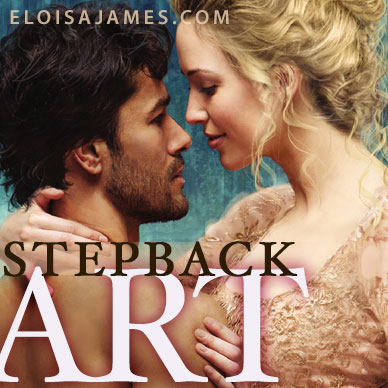
Stepback for Your Wicked Ways
Enjoy the stepback for Your Wicked Ways.
Mea Culpa, Your Wicked Ways
A reader pointed out that there’s a grammar error on page 274 at the bottom: “He had rearranged herself and him,” should be “herself and HIMSELF.” I flunk undergraduates papers for this sort of thing…
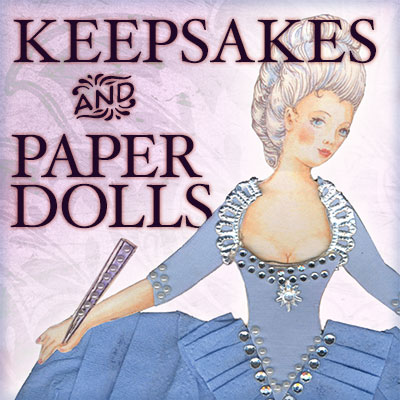
Duchess Quartet Collectible Card
Eloisa made up these gorgeous collectible cards for readers to celebrate the Duchess series. With Gina and Henrietta on one side and Beatrix and Helene on the other, this 5×7 can be yours. And this isn’t the only gorgeous card to be had!

Your Wicked Ways
Reviews
"[James] solidifies her reputation as a top talent in the crowded field of humorous romances."
— Publishers Weekly
"Her brilliant writing, intelligent characters and boiling sensuality allow readers to feel every sensation with her characters."
— Romantic Times BOOKClub (4 1/2 Stars, Top Pick)
"The characters leap off the pages in vivid detail, bringing their individuality to life."
— A Romantic Review (Five Roses)
Your Wicked Ways
Enjoy an Excerpt
Jump to Ordering Options ↓
Listen to an Audio Excerpt ↓
18 March 1816
The Countess Pandross to Lady Patricia Hamilton
. . . my dearest, as to what you tell me of the exploits of Earl Holland, I can only say that nothing will ever surprise me. The former Countess Godwin (who was, as you know, one of my very dearest friends) would turn in her grave if she knew that her son were entertaining opera singers in her house! And I shudder to think that one of these infamous women may actually be living with him. How his poor wife is able to hold her head high, I shall never know. Helene has always showed edifying composure although I did hear a whisper — just a whisper — suggesting that she may request a divorce. I can’t imagine how much that would cost, but Godwin must have at least 15,000 pounds a year and can probably afford it. At any rate, my dear, what I am truly longing to hear about is your plans for sweet Patricia’s debut. Didn’t you tell me that you were planning a ball for the weekend of the fifth? Mrs. Elizabeth Fremable tells me. . .
21 April 1816
Helene Holland, Countess Godwin, to her mother.
Dear Mother,
I am most sympathetic to your distress over the continuing debacle of my marriage. I fully recognize that my decision to elope with Rees brought scandal into the family, but I would remind you that the elopement was years ago. I am equally aware that a divorce would be far more grievous. But I beg of you, please accept my decision. I simply cannot continue in this fashion. I am heart-sick when I think of my life.
Your loving daughter,
Helene, Countess Godwin.
22 April 1816
Rees Holland, Earl Godwin, to his brother, a vicar in the North Country
Dear Tom,
Things are all right here. Yes, I know that you are fretting over my infamous reputation, but you will simply have to overlook my slurs on the family name. I assure you that my sins are even more plenteous than your pious correspondents have told you. Women dance on top of the table in the dining room daily.
Yours with all proper sentiment,
Rees.
22 April 1816
Miss Patricia Hamilton to Miss Prunella Forbes-Shacklett
Dear Prunes,
It is too bad of your mama to bury you in the country! When is she planning to bring you to town? I assure you that it is already very crowded here, and if one does not make an appointment, it is impossible to find a mantua maker who will even discuss a court gown. But Prunes, I met the most absolutely fascinating man yesterday. He is apparently quite, quite notorious — a veritable rake! I am not going to put his name here, in case my abominable little brother obtains this letter before I mail it, but he is an earl and his initials are RH. You can look him up in Debrett’s. Apparently he threw his wife out of the house some years ago, and now lives with an opera singer! My mother (as you can imagine) was in a flurry of anxiety and told me later not to even think of dancing with him, as there is talk of a divorce. Imagine: me dancing with a divorced man! Naturally I shall do it if the opportunity ever presents itself . . .
23 May 1816
Rees Holland, Earl Godwin, to Helene Holland, Countess Godwin
Helene,
If you’d like to see me, you’ll have to come to the house, as I’m trying to finish a score that’s needed in rehearsal directly. To what do I owe this charming, if unexpected, pleasure? I trust you are not going to request a divorce again, as my answer will be the same as the last. I’ll tell Sims to wait for a reply as I think it doubtful that you will find the backbone to enter this den of iniquity.
Rees (should I say, Your Darling Husband?)
23 May 1816
Mr. Ned Suffle, Manager of the Royal Italian Opera House, to Rees Holland, Earl Godwin
Without putting undue pressure on you, my lord, I must have the score of The Quaker Girl by the end of this month latest.
23 May 1816
Helene Holland, Countess Godwin to Rees Holland, Earl Godwin
I shall visit you this afternoon at two of the clock. I trust you will be alone.
end of excerpt
Your Wicked Ways
by Eloisa James
is available in the following formats:
→ As an Amazon Associate I earn from qualifying purchases. I also may use affiliate links elsewhere in my site.